
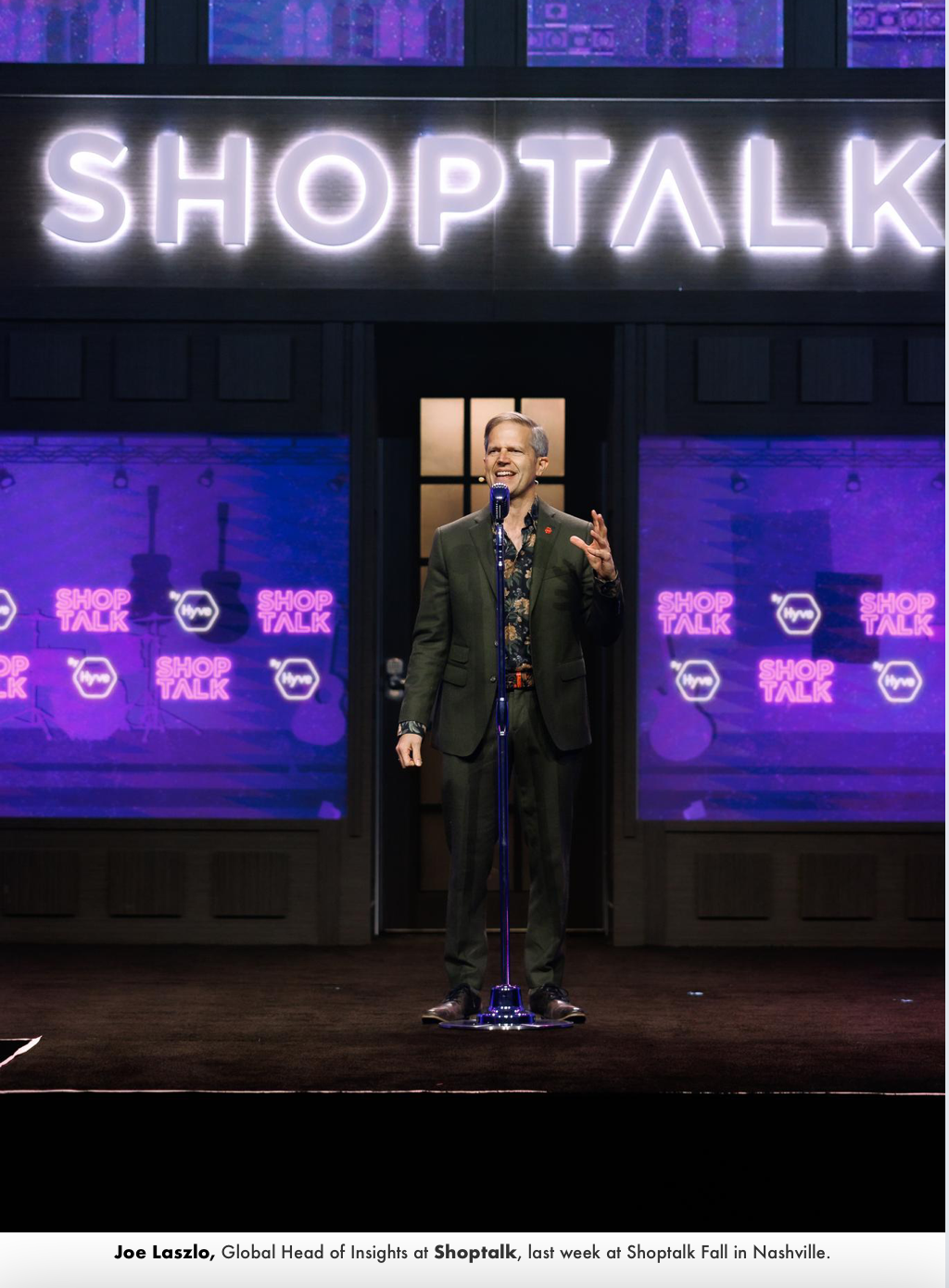
Joe Laszlo is the person who knows.
As Global Head of Insights at Shoptalk— Joe Laszlo identifies the cutting-edge themes, retail trends and technologies that matter to an audience of savvy and discerning senior executives.
That means hundreds of conversations throughout the year with retailers. Who better to know what’s on retailers’ minds — and in boardrooms — right now?
But Joe is also a master at distinguishing between today’s excitement and actual consumer adoption.
Agentic commerce, loyalty, retailtainment, live shopping: what is really changing — and what should European retailers be watching? Let’s jump in!
Shoptalk's three U.S. conferences: Shoptalk Spring, Groceryshop and Shoptalk Fall
From the Music City – Nashville 🎸
Hi Joe. What a fantastic Shoptalk Fall here in Nashville. Out on the streets, it’s all about music. Here at Shoptalk, it’s all about agentic commerce — it’s everywhere.
So I’m curious to hear what you think. Conversational discovery is already happening. Salesforce research shared at the show found AI agents will drive 20% of ecommerce traffic this holiday. But do you think agentic commerce — where consumers can discover and buy products through an AI agent without ever visiting a retailer’s website — will become mainstream soon?
Joe Laszlo: It’s a really big question, and I don’t think anybody really knows the answer yet. Up until very recently, the way people have used AI to help them shop was very much just that — it was kind of like Google, a new sort of search.
“I need new jogging trainers. I don’t want to look at 50,000 on a website. Just show me the five that are going to be best for me”. An agent can help you with that.
It’s really just in the last six weeks that we’ve seen companies like Instinct, a new startup, emerge. Meta now has an agent called Muse that, if you trust it enough to give it your credit card details and your login credentials to an e-commerce website, can actually make a purchase on your behalf.
And I think it’s a very unanswerable question right now: how many people are going to want to do that?
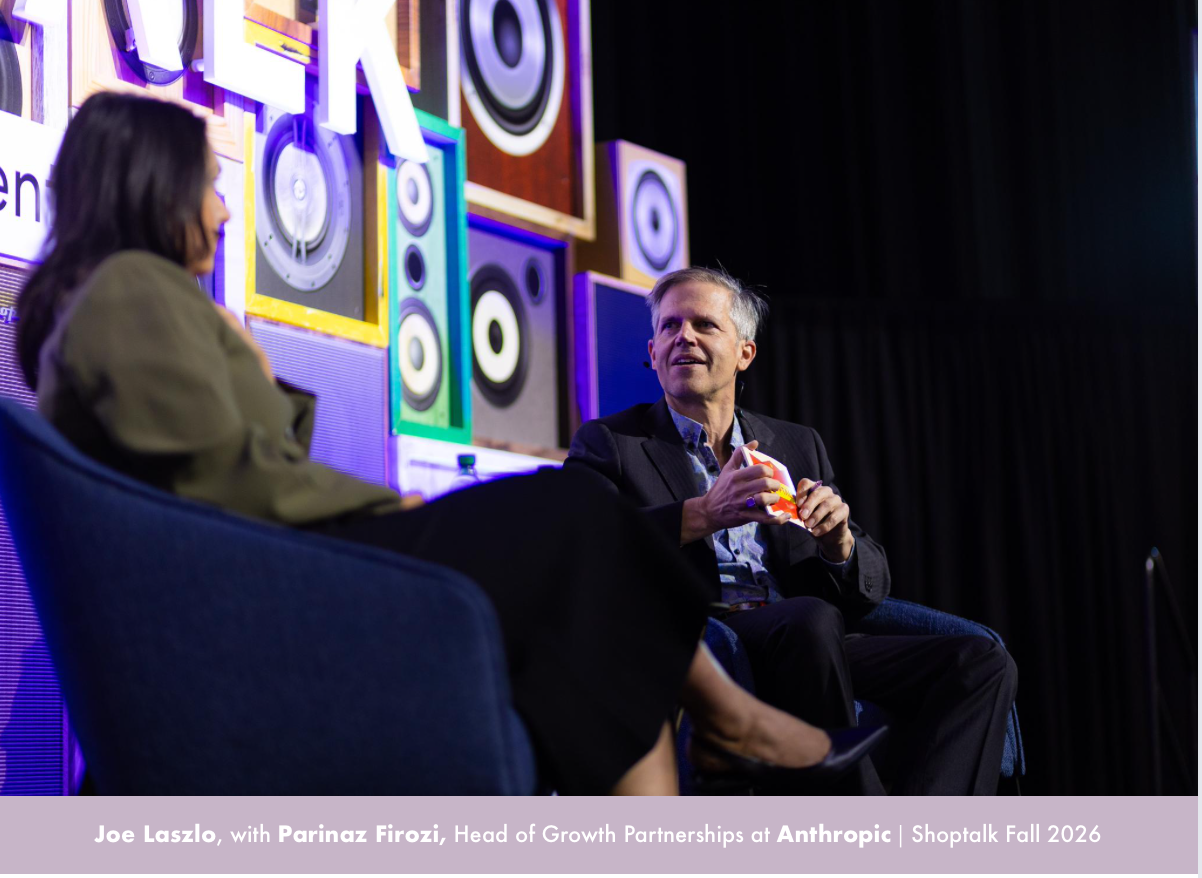
I did an interview yesterday with Parinaz Firozi, from Anthropic, who I would think would know these kinds of things.
Her view was very much that it’s the first thing: AI is the assistant helping you pick the products you want and find out about brands you don’t know. It’s not so much that AI is the thing you want to outsource the purchase to.
She made a distinction between things she doesn’t care about — the boring weekly, everyday purchases: ‘I need milk, I need eggs, I need bread, I need cereal,’ and whatever. For that kind of thing, maybe you do want an agent to do it for you.
But for a lot of the things we buy, I personally think that we actually like shopping, and we may not want an agent to do a lot of the fun shopping for us.
I think it’s going to be different for each individual person. Will agents be increasingly able to make purchases on our behalf? Absolutely. The capability will be there. Will people want agents to make purchases on their behalf? It’s going to depend on the purchase.
I think it’s going to be a small percentage of all shopping — or even all e-commerce — for a long time.
You speak with hundreds of retail leaders when building the Shoptalk agenda. What has surprised you most in those conversations this year?
Joe Laszlo: Surprises? I mean, I should say Shoptalk knows retail well enough that nothing ever surprises us. But one of the things that I did not plan on the Shoptalk agenda, and that has come up a lot over the last several days, is loyalty — the question of loyalty and how you build a lasting relationship with the shopper.
I kind of thought that, for a while, these very personalized, complicated and gamified programs — ‘earn three points and you’ll get whatever’ — seemed to be the norm. Then people started to pull away from that.
But there have been a lot of conversations about what it takes to get people to be loyal these days. Notoriously, younger shoppers, Gen Zers, seem to just go to whoever is cheapest. They don’t necessarily want to buy the same brand of toothpaste every time they go to the store. It’s what’s on sale that attracts them.
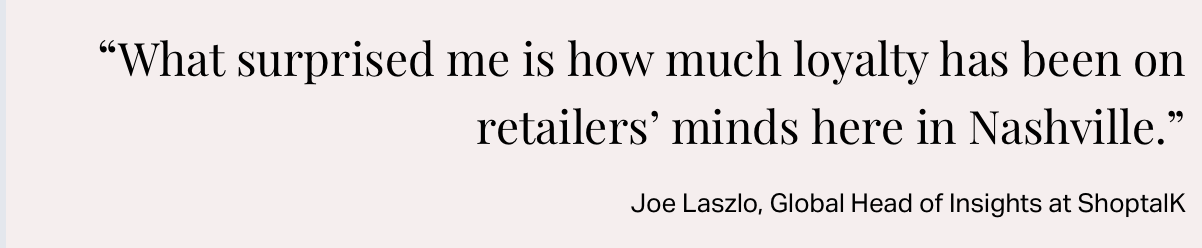
So I think what surprised me is how much loyalty has been on retailers’ minds over the last couple of days here in Nashville.
We’ve heard a lot of conversations about the idea that there are two kinds of loyalty. There’s transactional loyalty — the ‘buy 10, get one free’ kind of loyalty.
But there’s also emotional loyalty: the fact that, even though this is a brand and it’s a for-profit company, ‘I like what it stands for. I like its purpose, or I like the founders, or I like something about it that’s going to make me pick it out of all the other choices I might have.’
So the loyalty conversation was not one I was expecting to be a big one this week, but it has been.

Joe Laszlo, Global Head of Insights at ShoptalK
I know you visit a lot of stores. One of the topics here is also how the physical store is no longer just transactional, but also about entertainment and storytelling. Have you visited any stores recently that really impressed you?
Joe Laszlo: Unquestionably, I’d say both online and in physical stores, there’s this idea that retail needs to be more than just the fastest path to checking out and buying the thing you want.
That’s another thing that surprised me. For the last however many years, the story, especially around e-commerce, has been about making it frictionless, making it so easy to buy.
And now we hear people saying, «Maybe there should be a little friction in there». Because if the friction is fun, if the shopper enjoys it, that again kind of builds that emotional connection: "Oh, I liked shopping on that website or in that store. I’ll be more likely to go back.’”
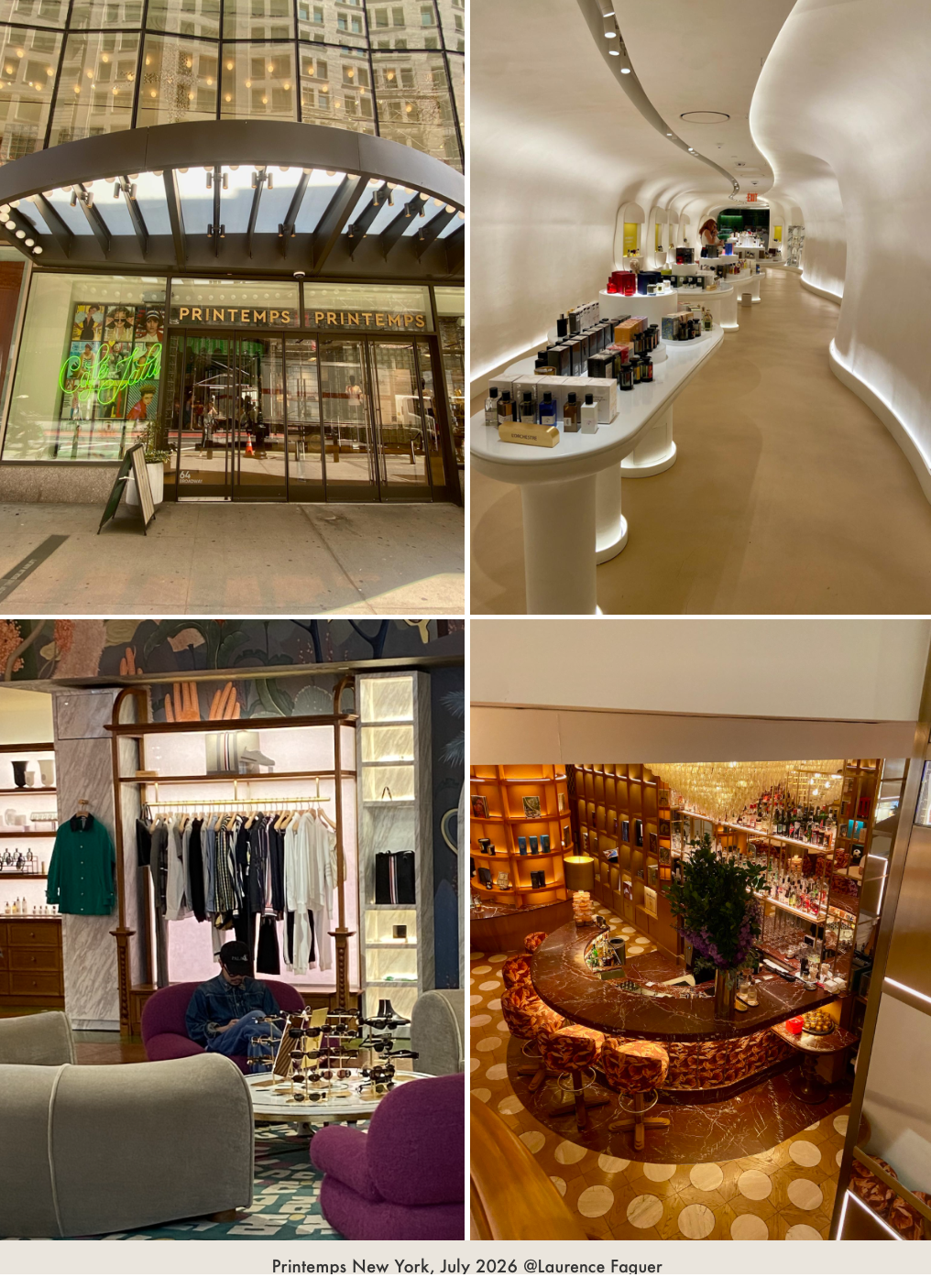
And so you asked for specific examples. It’s not the newest in the world anymore, but the branch of Printemps on Wall Street in New York was designed to be so experiential and so beautiful.
I haven’t talked to those people in a while, so I don’t know what their sales per square meter are. At some point, a store does have to generate some revenue. But they really wanted it to be an introduction to the brand for a lot of Americans who don’t know the brand very well.
So I think it’s beautiful. It’s just fun to walk through, even if I don’t need to shop. It has a whole bunch of dining experiences built into it.
I think that, in the last couple of years, as retail, experiential retail and entertainment have come together, the easiest thing for a retailer to do is stick a café — like a little espresso cart — in their store.”
Now that's so common it kind of doesn't stand out to me anymore, but I think of a place like that has really through not just what's the experience gonna look like, what's the architecture, the design going to look like, but also let's give somebody an actual inviting place to sit down and have a cup of tea or a martini. It's very valuable. So I think I'd point to that.
[Following]
Eataly, too. They’ve been around for longer, but I think Eataly, on a different level and with a different kind of retail experience, has always excelled at that. There are things to try, things you’ve never heard of before, restaurants, places to get a drink.
And so I think they’re always kind of one of my go-to examples of a company that’s been doing it for a long time. But other categories are doing it too. I think it’s still elevated above what almost all other food retailers do.
If you could tell a European retail CEO to pay attention to just two changes happening in U.S. retail right now, what would they be?
Joe Laszlo: Keeping an eye on what Muse and Instinct, and these new AIs, are doing here — and what the consumer, what the shopper's response to them is.
People are going to download Muse, they’re going to download Instinct and play with them. They’ll do a couple of things with them. But the question is: does it become part of their life? Does it change the way they organize their day-to-day routine?
I think Europeans should be keeping an eye on that, because if it does turn out to be not just a novelty but actually valuable to consumers, then, in some way, shape or form, I think agentic AI is going to take off in more places than just here.
The other thing that I would point to is live video shopping. People have been talking about it happening outside of East Asia for years and years. Finally, in North America at least, between TikTok Shop, Whatnot and one or two other startups, we’re seeing brands really begin to embrace live shopping and figure out how to use it in a way that’s different from the key opinion leaders that kind of dominate the Chinese market.
I think we’re finding a European, North American, Western way of doing live shopping that is, again, fun. People apparently spend a lot of time watching those things.
Regular old e-commerce through websites still dominates in terms of the number of dollars that are spent. But I think there’s this very interesting thing emerging around the edges that could become very important for some categories in the near future.
So I’d say looking at the consumer response — the shopper-side response — to the fact that we now have these agents that can buy for us, and looking at who exactly is spending those hours watching fun shopping experiences on TikTok Shop, will be some good indicators for European retailers of the potential shape of things to come there as well.
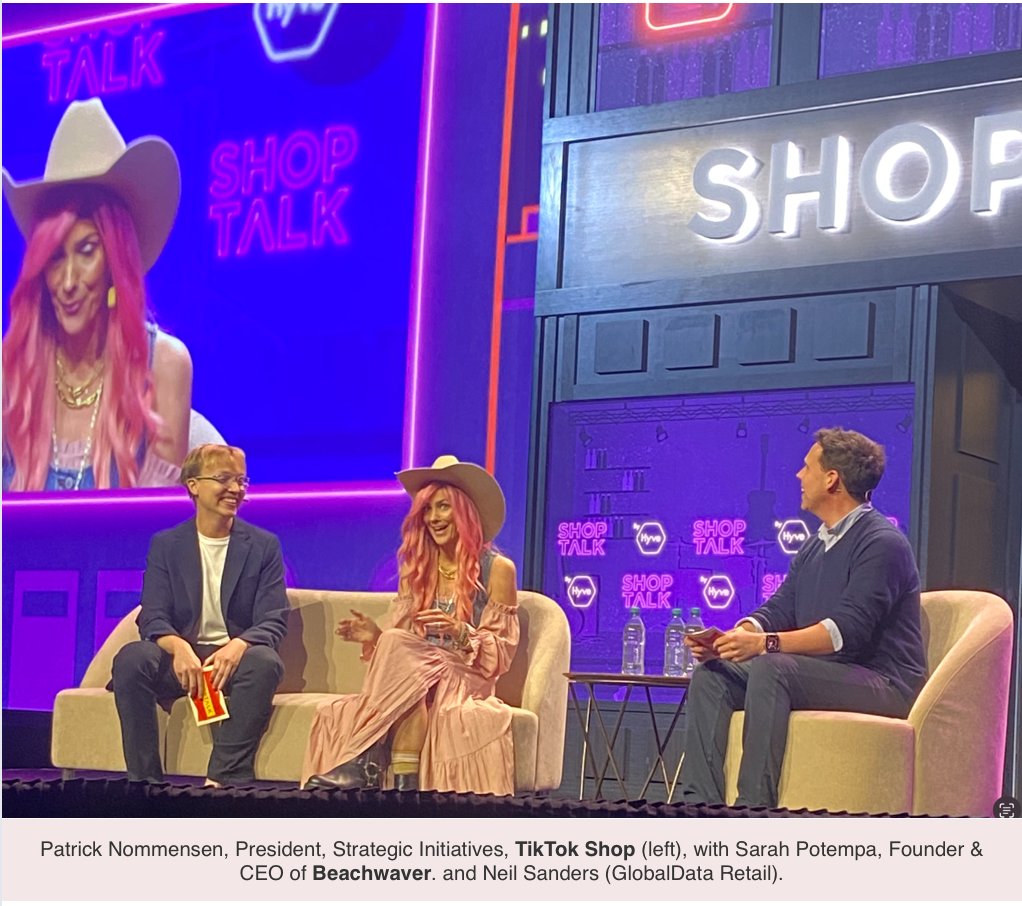
You put together a great session on TikTok Shop with Patrick Nommensen, President of Strategic Initiatives at TikTok Shop, and Sarah Potempa, Founder & CEO of Beachwaver.
Yes, I thought that was a very good conversation. I am so glad we had Sarah. She was so passionate.
Absolutely. And so many other speakers.
I realize there's a lot of enthusiasm to be here this year and I think the whole industry is very not sure what the next year holds.
Thanks Joe! See you in Las Vegas in March!
✨SHOPTALK IN 2027
Shoptalk Luxe Abu Dhabi (February 02 - 04) ⎸ Shoptalk Spring Las Vegas (March 22-24 ) ⎸Shoptalk Europe Barcelona (June 1-3) ⎸ GroceryShop Las Vegas (Sep 13-15)⎸ Shoptalk Fall in Nashville (October 5-7)